Fun Stuff
Here are a few stories, enjoy!
Places
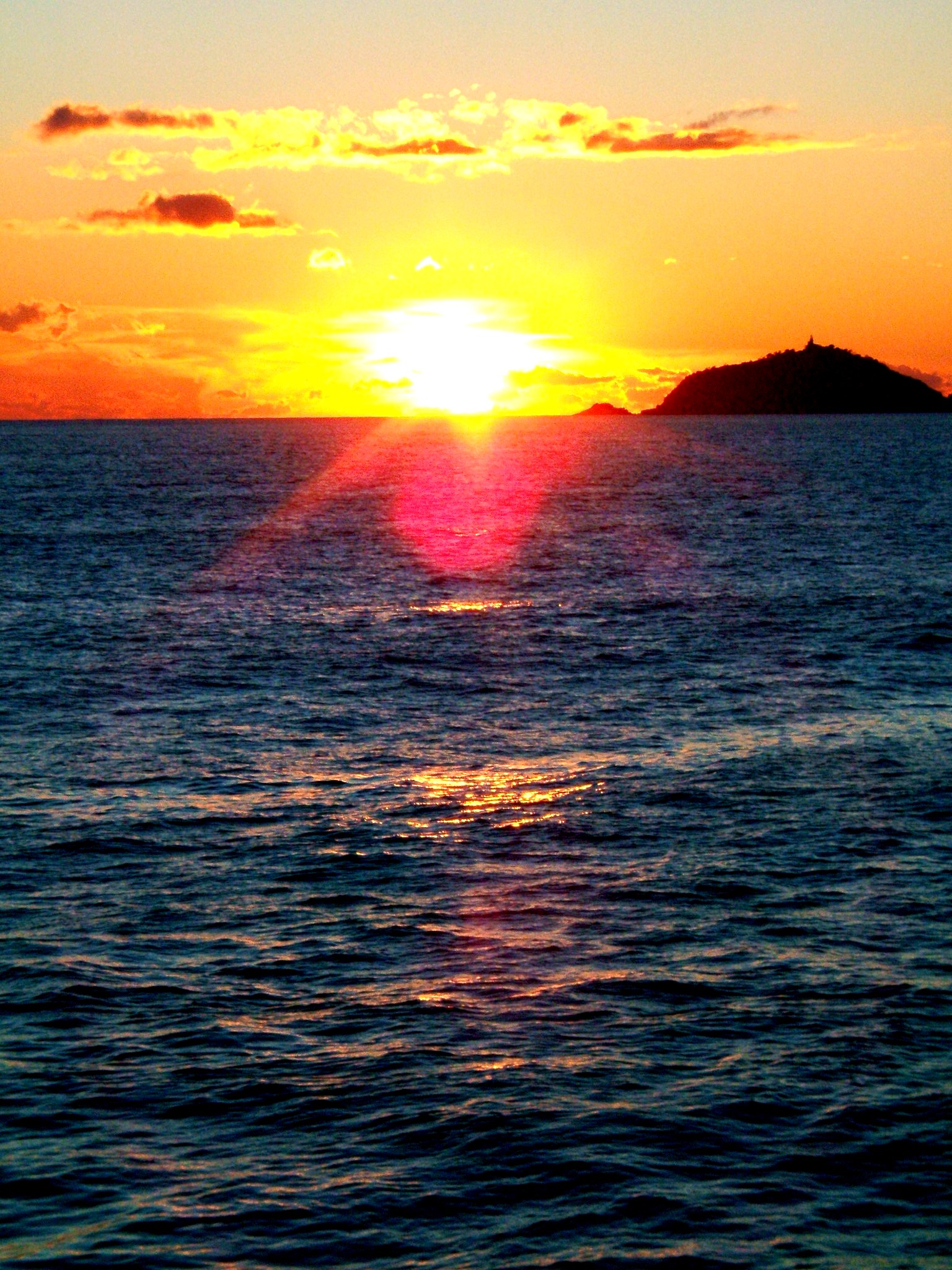
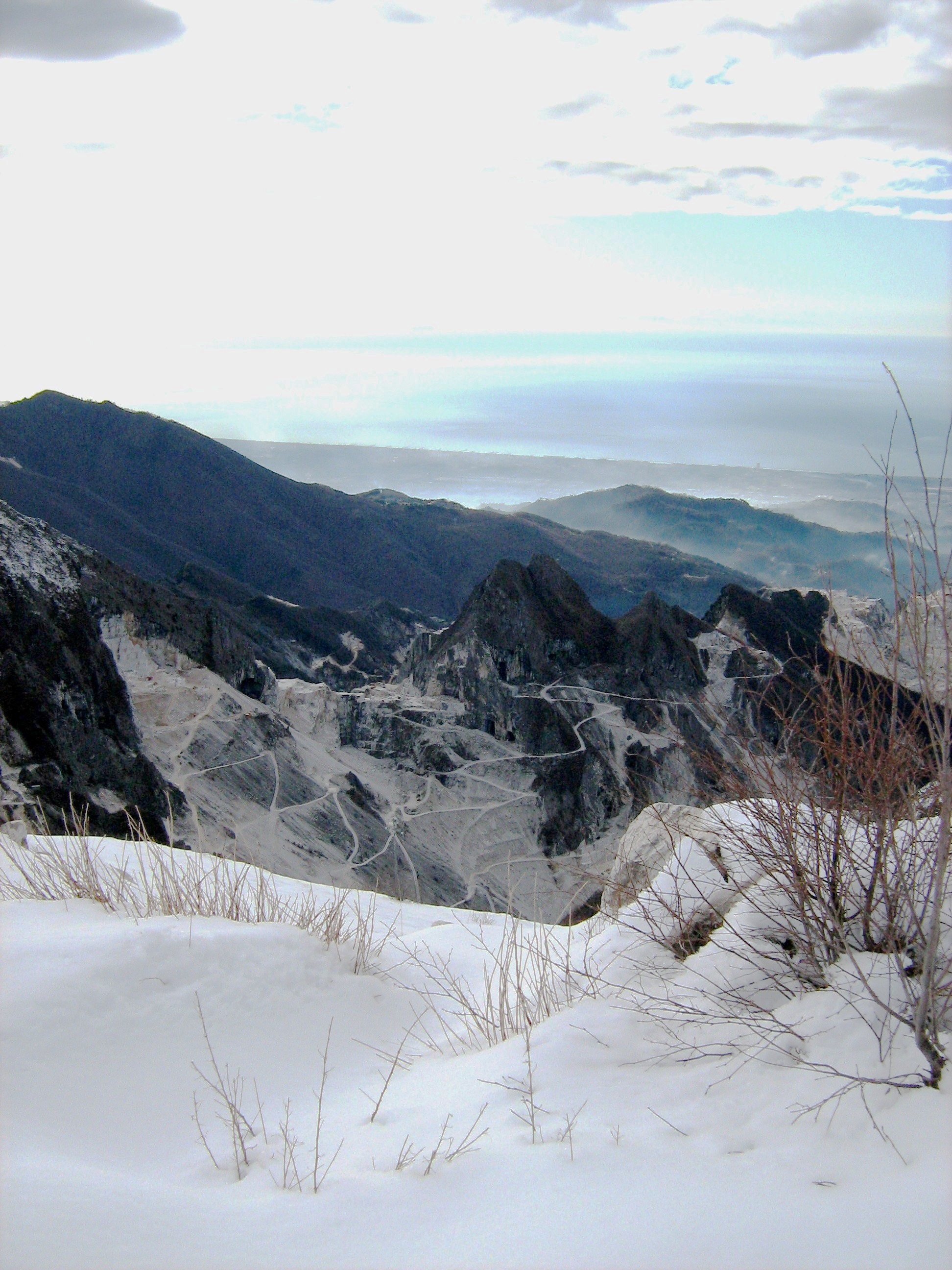
Figure 1 & 2. Left: Tellaro, Liguria at sunset. Right: Alpi Apuane, Toscana.
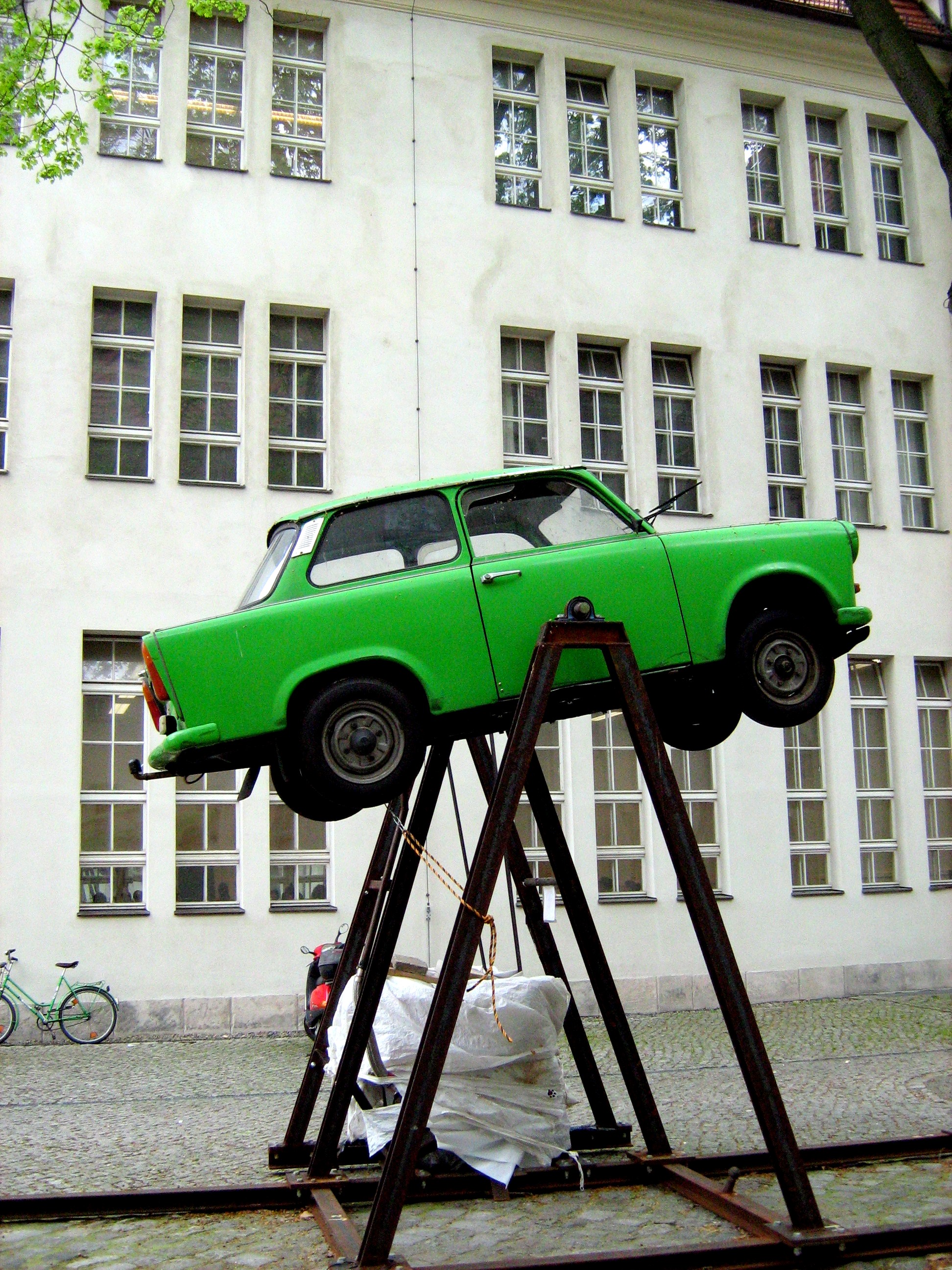
Figure 3. Trabant parking.
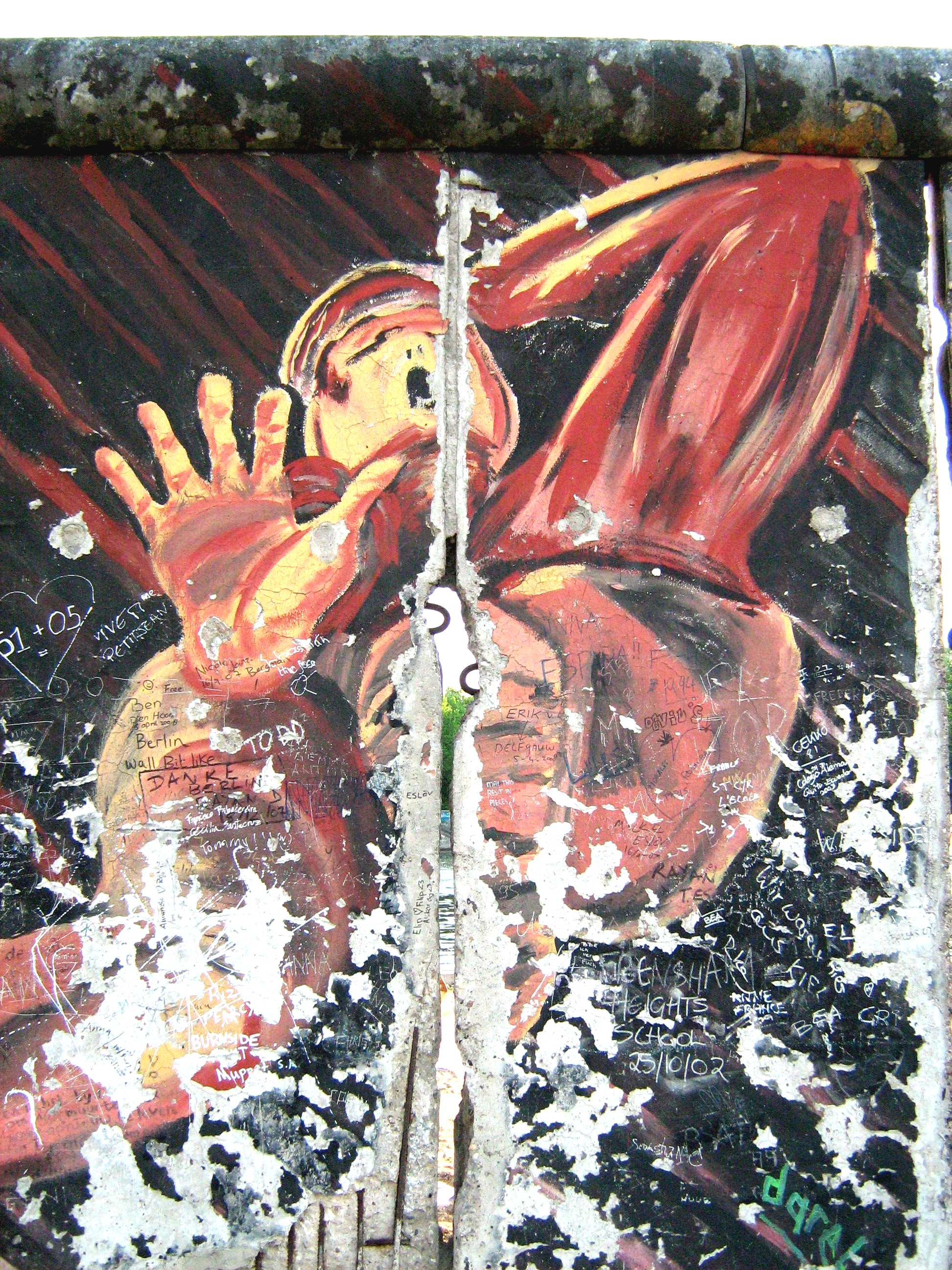
Figure 4. Berlin Wall.
I have seen many amazing places, spanning all continents except Australia and Antarctica. Here, instead of showing a bunch of pictures of my favorite locations, I'd like to comment on the countries where I have lived and worked. These are Italy, Germany, France and the United States.
I have mixed feelings for Italy. It is my country of birth and there I have many life-long friends and colleagues. I love Italy in several respects, e.g. for its art, landscapes (Figures 1, 2), folklore and food. Yet, I also have negative feelings for it. Let me be more precise.
For instance, Italy is a country where it is becoming more and more difficult to find a job. In terms of research, Italy ranks poorly by most scoring parameters. One of the reasons —perhaps the most important one— for this is not a mystery: a political class that has always been interested in maintaining the privileges of the few instead of being at the service of the people. People are resigned and have little hope for the future.
Germany, instead, is a solid country. Yet, it is perhaps difficult to live in if you come from the Mediterranean area, particularly due to the lack of Sun. I spent some months in Berlin, and it was love at first sight. I think Berlin is one of the best cities in Europe. I could live there (Figures 3, 4).
My work as astronomer led me to spend some time in Nice, France. It took me a while to adjust to french language and you don't really feel at home until you manage to express yourself in french. Southern France is really beautiful
Finally, the US. Living in Boulder, CO, is perhaps not that radically different than living in Europe, but, sure, there are major differences. Nature is remarkably different, and even more so is the wild life. Since I like deserts, the nearby hellishly hot and dry southwest is a sort of paradise for me (Figure 6).
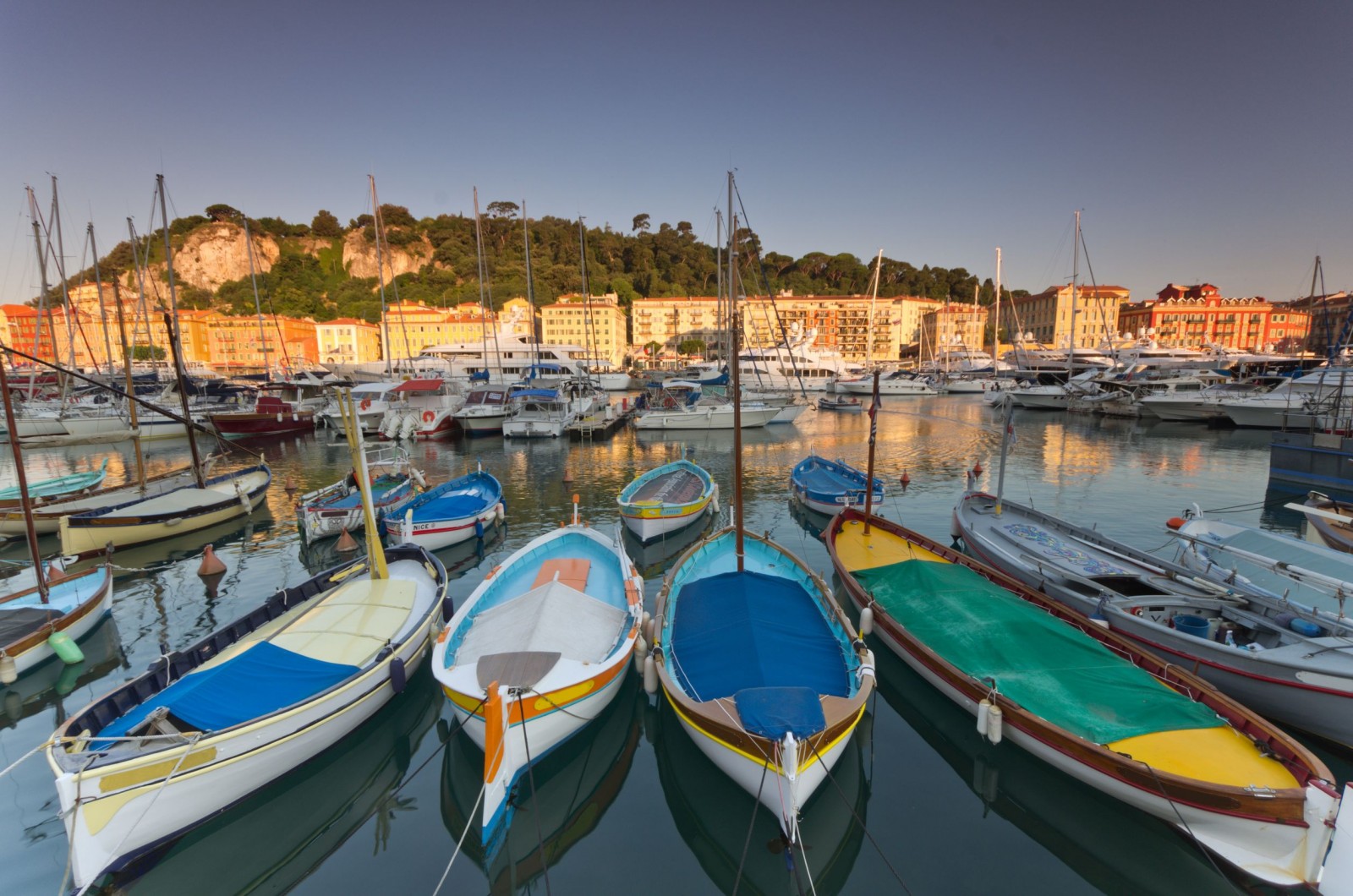
Figure 5. Port of Nice.
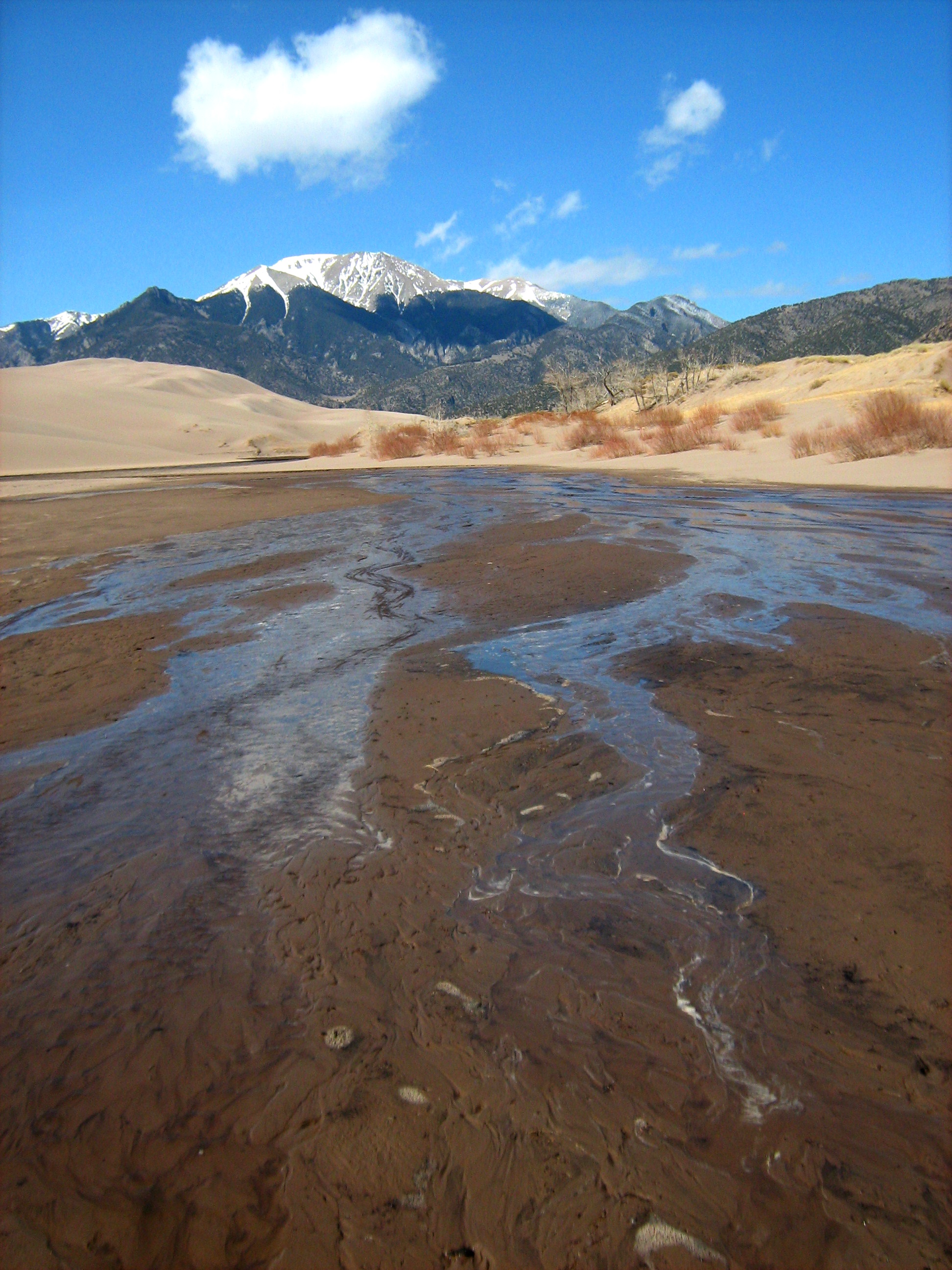
Figure 6. Medano creek.
Music
There is a lot of music I like across different genres. So, instead of making a list of my favorite groups, I'll just provide a few.
Well, when it comes to picking a few, at first the choice seems tough. But actually, the more I think of it, the easier it is.
Here you go:
I still recall what I felt when I first listened to "Rain Dogs" or "Bone Machine". That music was, and probably still is, very different to what I had ever heard before. It got me not because of the lyrics (well, at that time I barely knew three words of English, at most!) but for all those unexpected rattling sounds. Later, I also loved the lyrics, often as sharp as a razor blade. The very few video clips I saw at that time were also shocking (check out "Goin' out west" or "Don't wanna grow up").
"Rattle big black bones in the Danger zone There's a rumblin' groan down below There's a big dark town, it's a place I've found There's a world going on underground" (From "Underground" in Swordfishtrombones, 1983)
Well, Tom Waits is definitely an eclectic guy. My interest in his music and character brought me to attend two of his rare concerts in Italy, in Florence (1999) and Milan (2008) (Figure 7).
Since I am Italian, I cannot refrain to talk about Italian singers. There is a lot of excellent music, and it is a pity that it is unknown abroad. Fabrizio De Andre' is by far my favorite singer-songwriter (Figure 8).
His lyrics are unequalled. He was a great observer of the human condition, and always on the side of the wretched ones and always against the powers:
"Certo bisogna farne di strada da una ginnastica d'obbedienza fino ad un gesto molto più umano che ti dia il senso della violenza però bisogna farne altrettanta per diventare così coglioni da non riuscire più a capire che non ci sono poteri buoni da non riuscire più a capire che non ci sono poteri buoni." (From "Nella mia ora di liberta'" in Stroria di un impiegato, 1973)
Other musicians I like are:
Nick Cave & Bad Seeds, Gogol Bordello, Vinicio Capossela, Carmen Consoli, PJ Harvey, Bob Marley, Atahualpa Yupanqui, Alfredo Zitarrosa, Quilapayun, Inti Illimani, Violeta Parra, Pearl Jam, Eddie Vedder, Neil Young, Johnny Cash, Bandabardo', Robert Johnson, Muddy Waters, Radiohead, C.S.I., Mercedes Sosa, Chavela Vargas .... and many more!
Figure 7. Photos of Tom Waits in Milan, 2008.
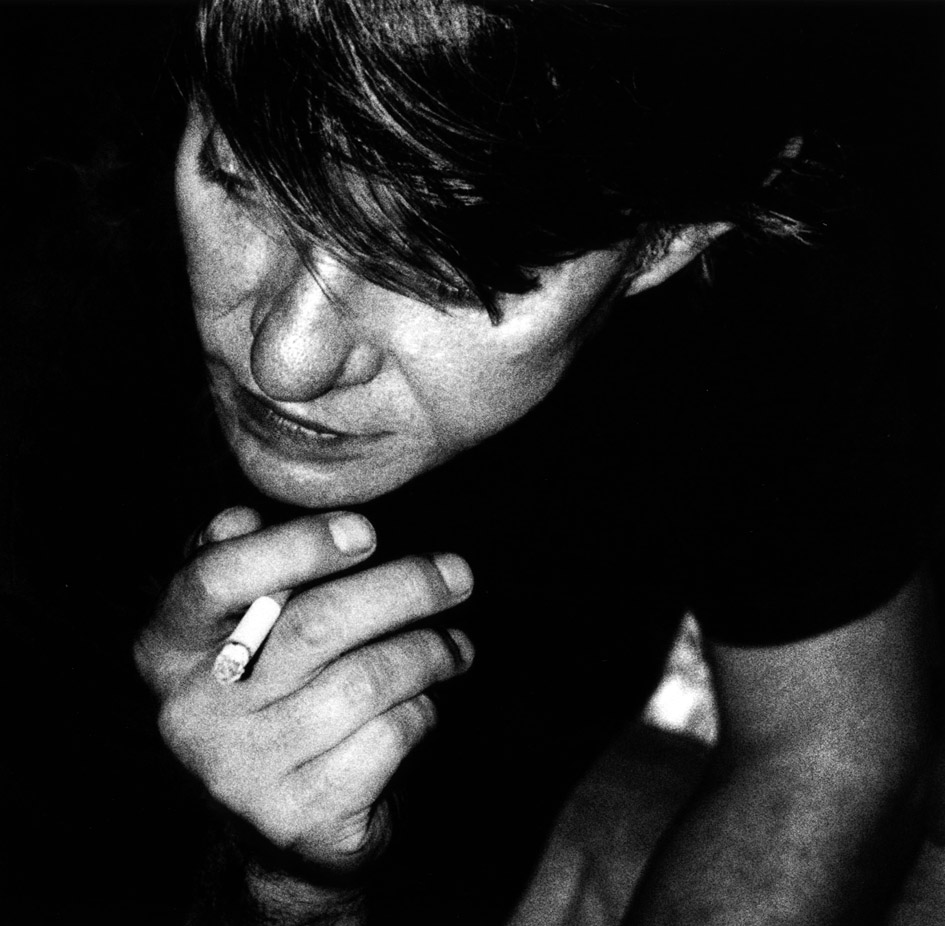
Figure 8. Fabrizio de Andre' in the 90s.
Arts
Well before becoming attracted to Astronomy, I was interested in painting and other forms of visual arts. I have been painting (mostly using black ink/paint on white paper) for years. In more recent times, although I have had to slow down my production (too many things going on!), I have introduced the use of colors and different materials (oil, acrylic, glue, etc). Some of these works —mostly seen by close friends at my house— have been occasionally brought to light in small, local exhibitions.
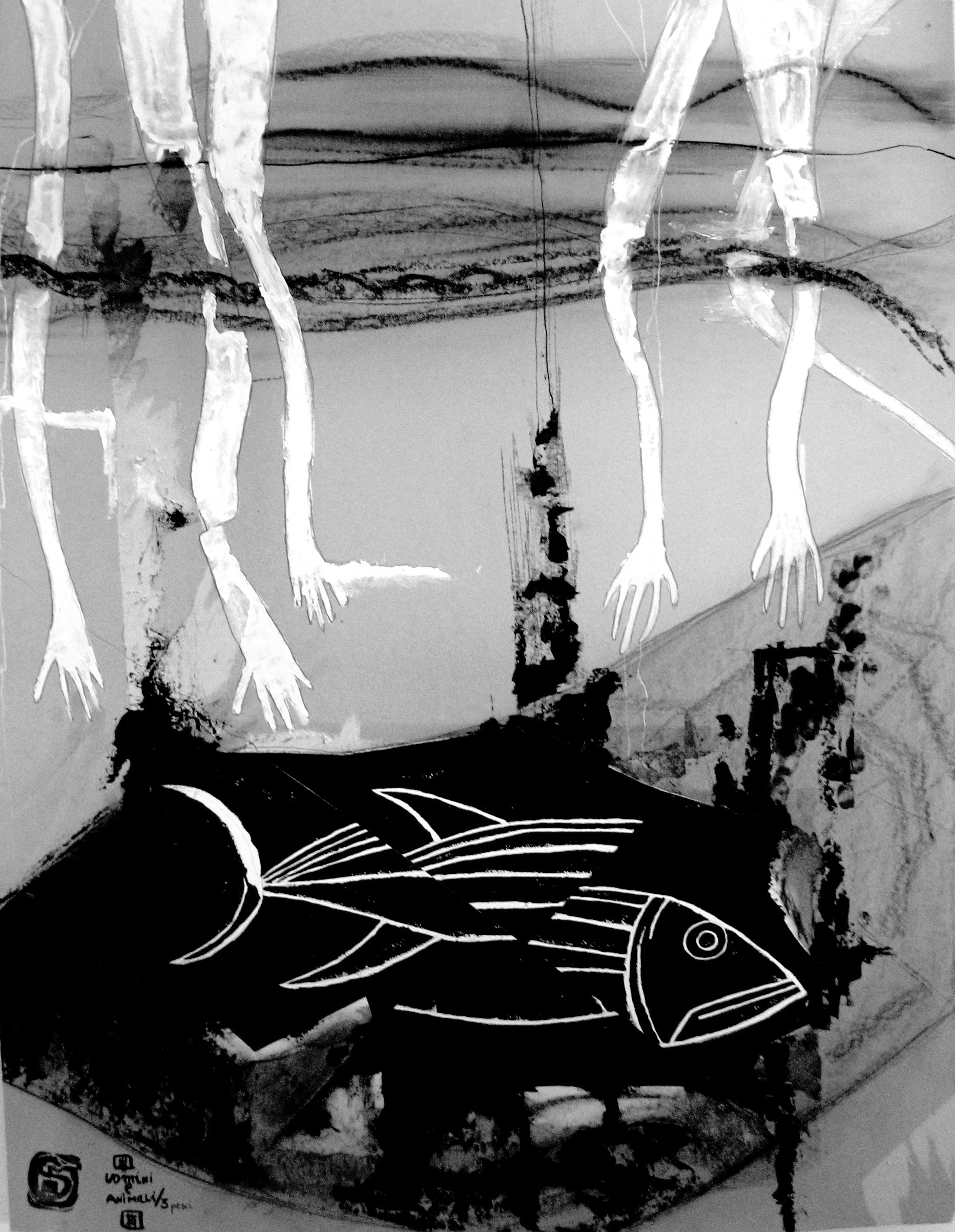
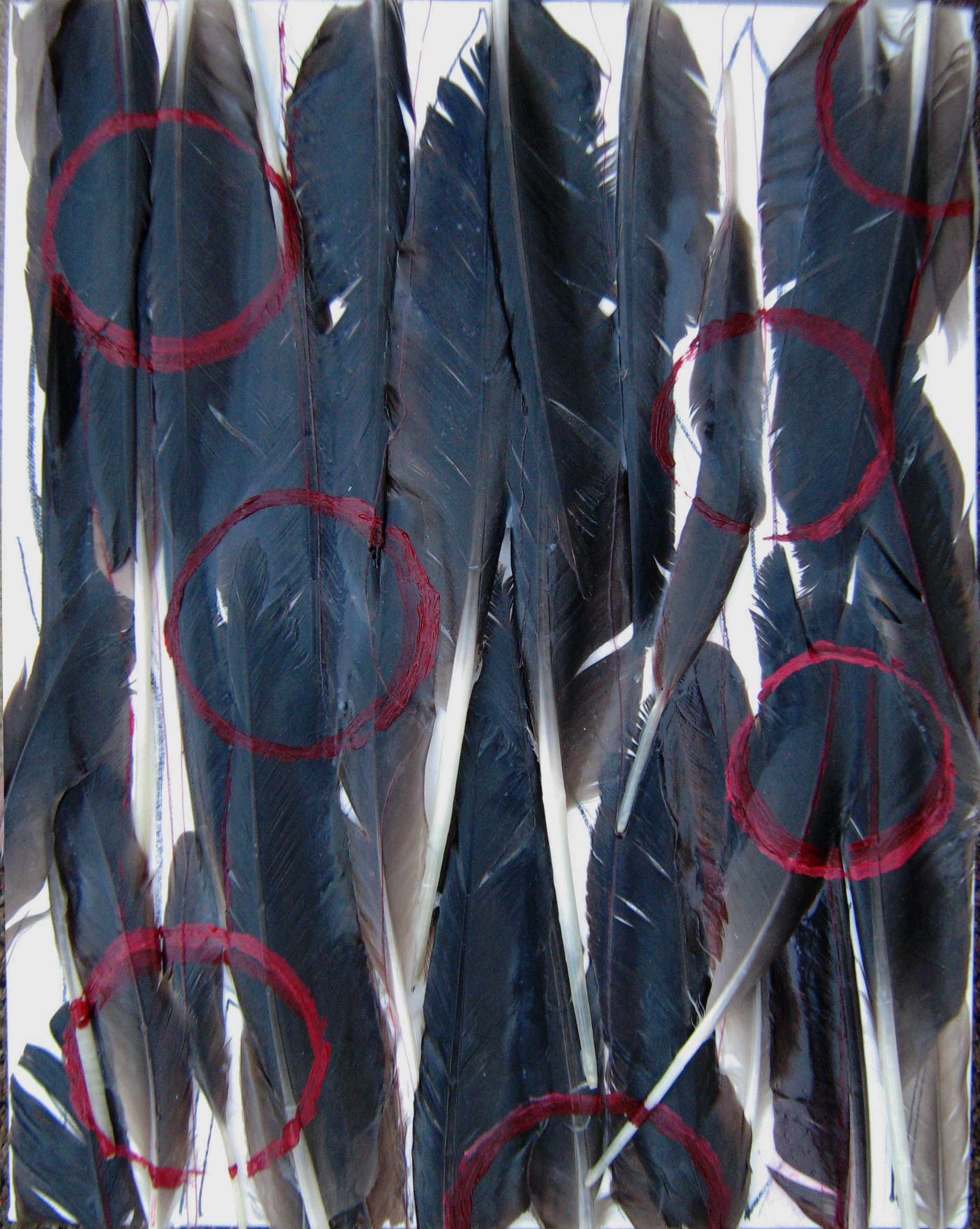
Figure 9. "Pesci" (left) and "Falling feathers" (right).
Here are a couple of examples of my paintings. The first one (Figure 9, left) dates back to about 2008, and it belongs to a series of 5 paintings entitled "Pesci" (Fish).
A second example is shown in Figure 9 (right). This one was realized in spring 2013, and it is called "Falling feathers".
Another thing that has always fascinated me is the production of little statues in bronze or brass via the ancient technique of lost-wax casting. This technique is rather challenging and requires interaction with an artistic foundry (Figure 10).
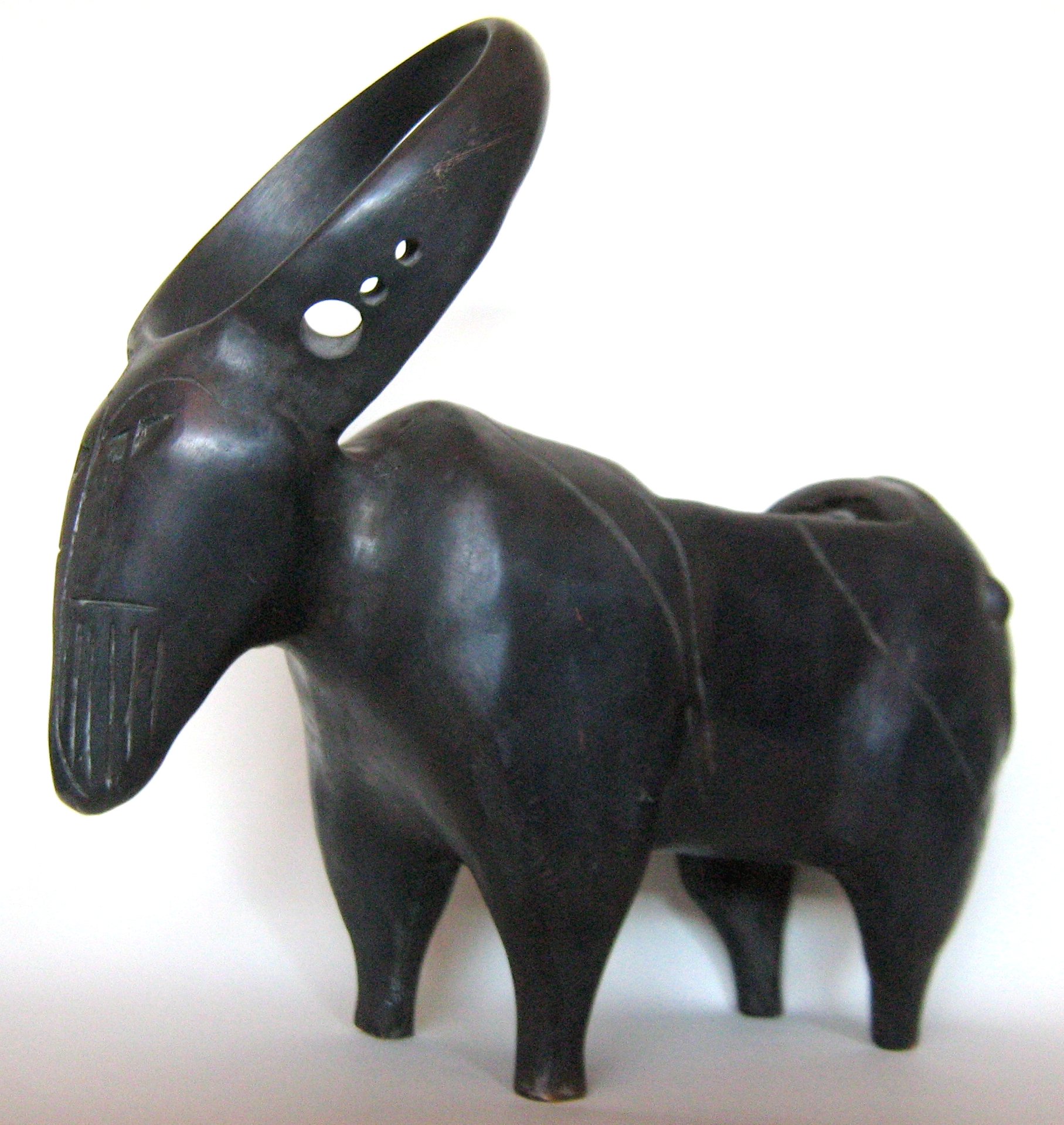
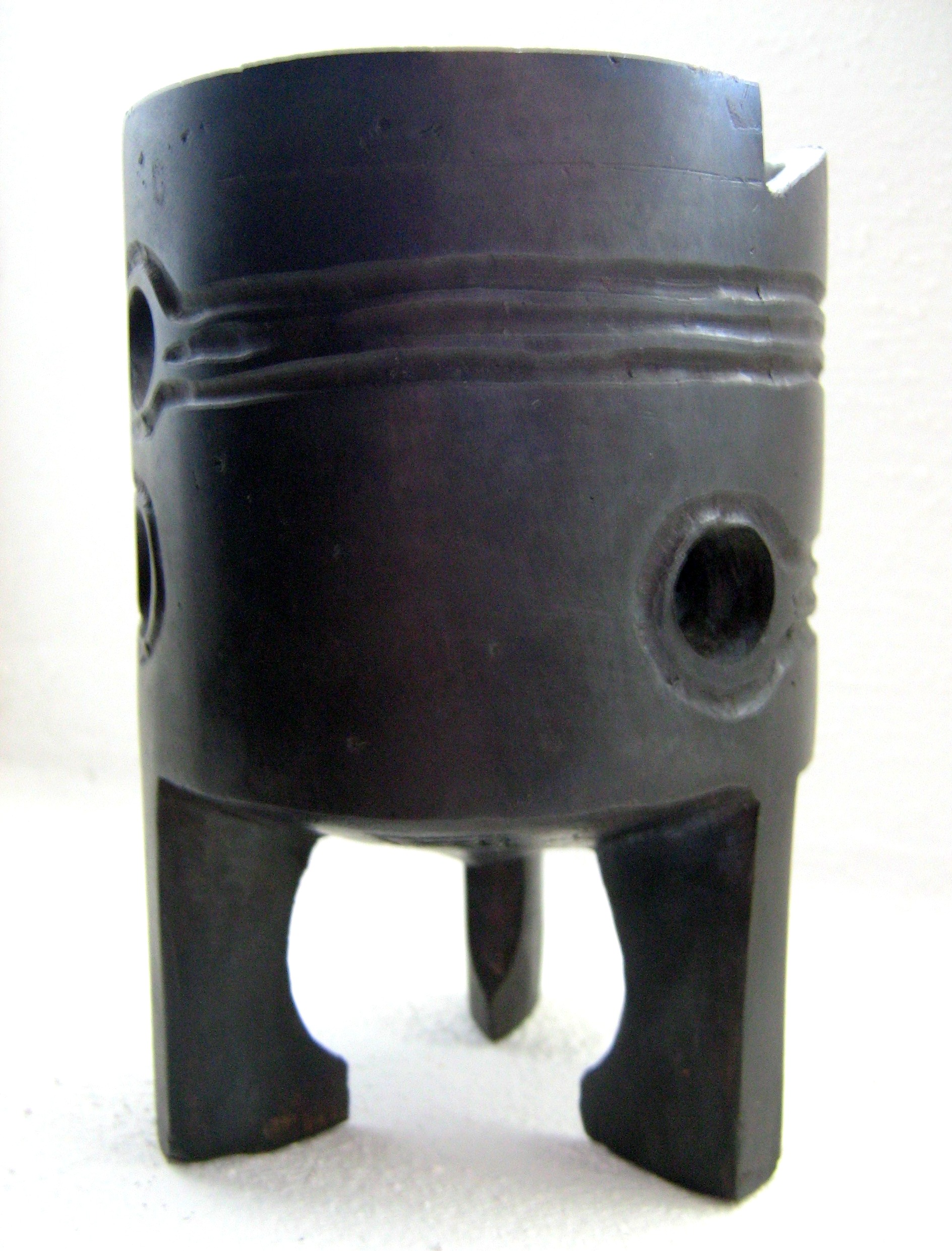
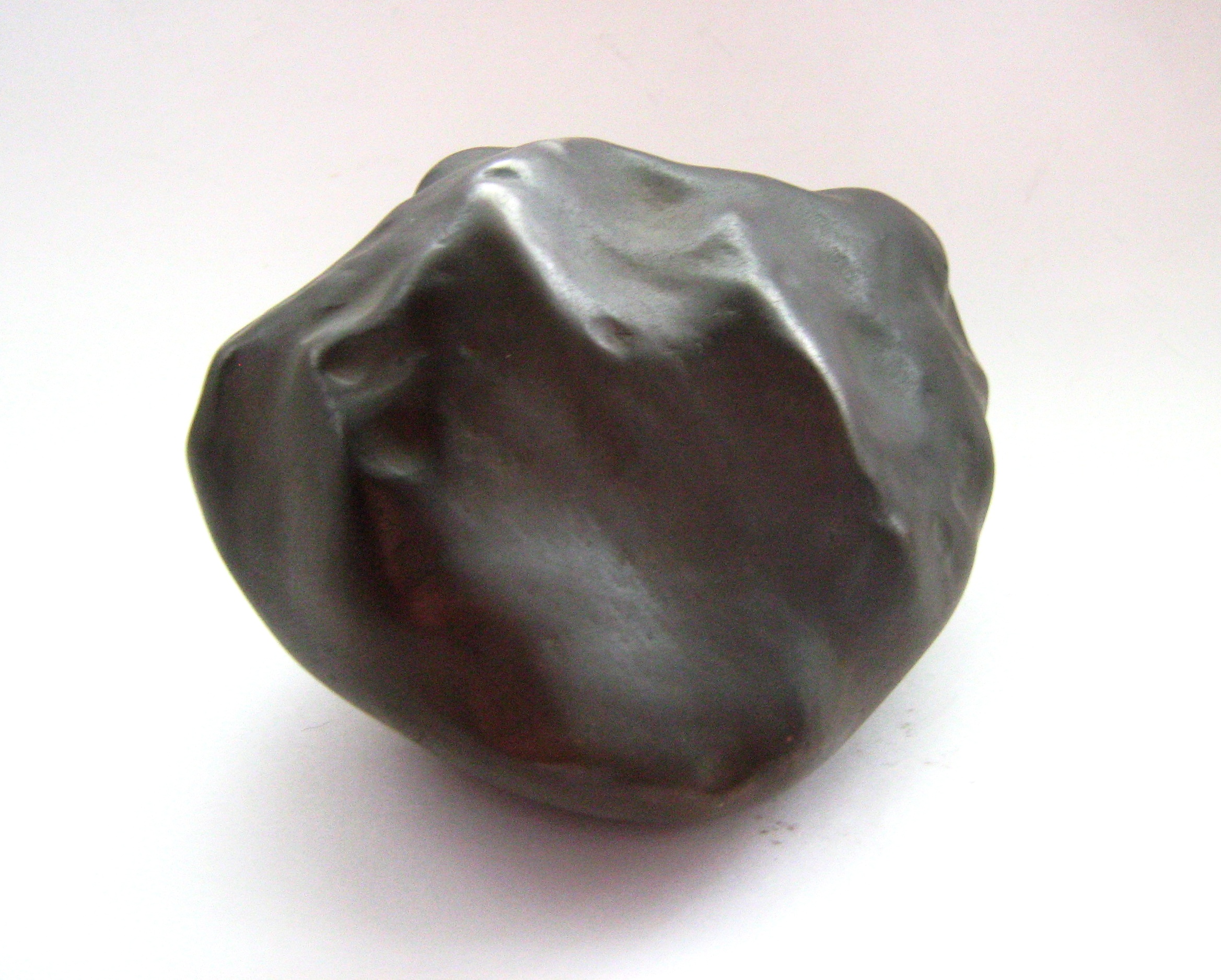
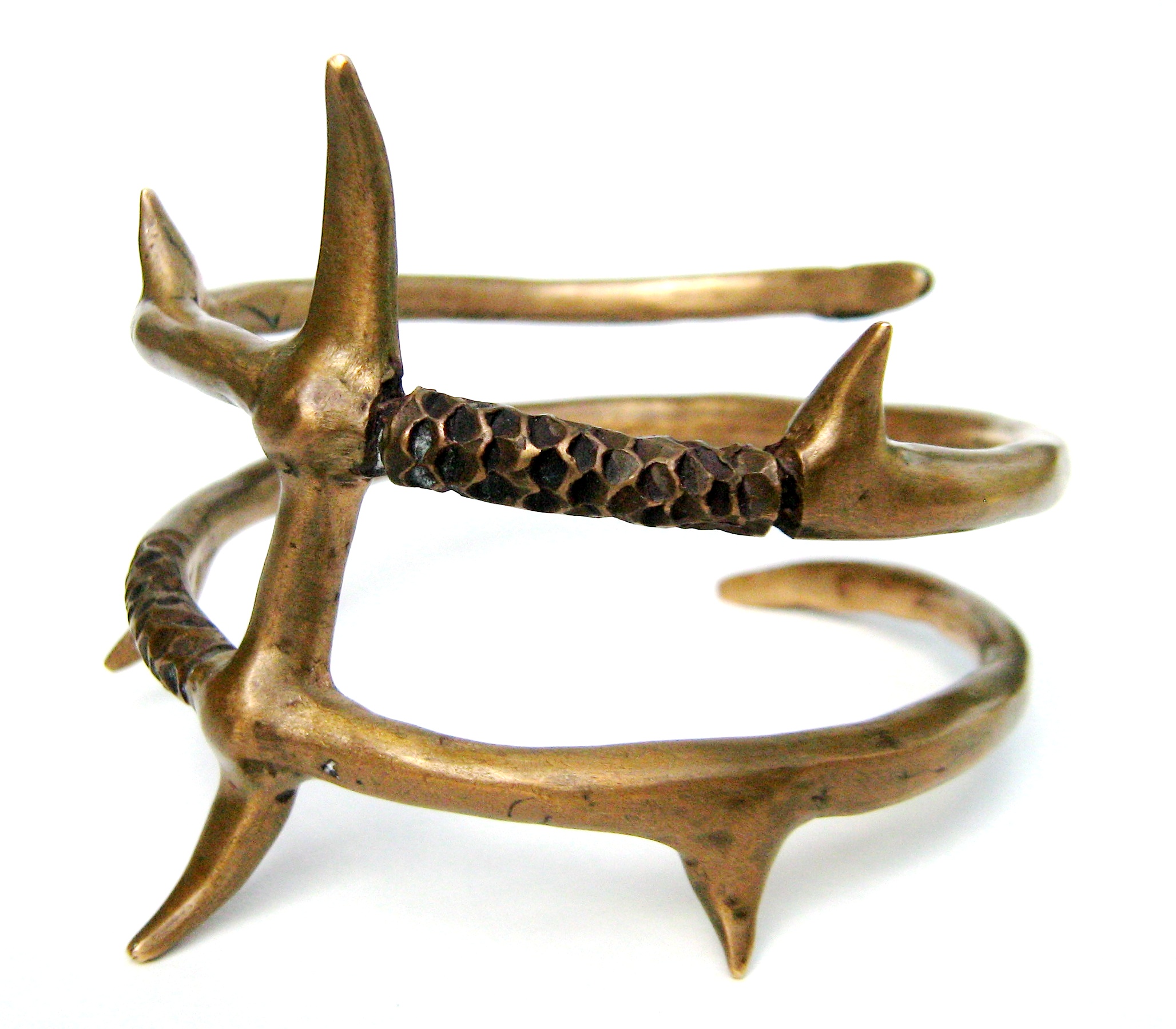
Figure 10. Examples of cast-bronze statues.
Random Walk
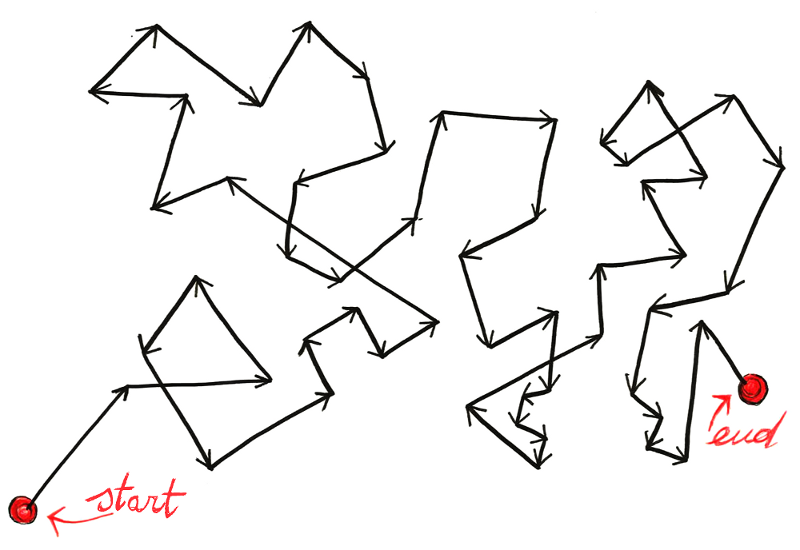
Figure 11. Random walk sketch.
The term "random walk" expresses an interesting concept, which applies to different phenomena. For instance, in the study of gases and fluids, it is used to describe the motion of a particle immersed in a sea of other particles. The directions of the incoming particles are random, therefore so is the motion of the tracer (see Figure 11). Its motion isn't quite a straight line, nevertheless, the distance from the starting position increases over time.
I like to think of this process as a good way to describe my life. Unexpected things have happened, and, like random kicks, pushed me in directions that I would not have foreseen. No matter how hard I tried to control the direction of the movement, the reality forced me to follow other paths.
There are two ways to deal with this. Either you resist, trying to correct the direction of the motion, or you follow the random walk and try to obtain the maximum from each segment, until the next kick forces you to change direction. Well, as I learned the hard way, the first approach doesn't pay off. The second works much better once you understand and accept it. So I did: Certainly going somewhere, but without knowing where.
A Winter Tale
Boulder is a small town nestled at the foothills of the Rocky Mountains. Frequently, local newspapers feature articles informing that wild animals have been spotted amidst residences. Sometimes it is a black bear, perhaps a pack of coyotes, or more seldom a solitary mountain lion.
I love watching wild animals roaming free, and I have been hiking the many trails around the city with the hope of a rare encounter. Disappointingly, I have been more lucky from my yard (deers, garter snakes, and foxes are rather common) than hiking. Eventually, I ended up asking myself "how is that possible?".
Then I realized, Boulder's trails are too popular. Hordes of hikers wander around them at all times of the day. Hikers are an interesting tribe. Some are loud runners that like to chat —or better shout— while exercising. Others go with unleashed dogs that wander off trails with their beloved owners constantly shouting and whistling to call them back.
Now for a brief digression. I'm totally blown away by the number of dogs in Boulder. I bet there are more dogs in Colorado than in all of Europe! I don't understand why people here are so fond of dogs (well, you see, I am a "cat person"). I mean, it really is unbelievable. Dogs are everywhere, anytime. The other day I woke up at the crack of dawn and while enjoying my tea I peeked out the kitchen window. Outside was dark and freezing, and yet I counted 4 owners with 7 dogs, most of which were executing their morning physical needs. It seemed like they had a secret plan to come and do their thing in front of my window, and I said to myself, "what the heck!" (remember, it was early morning, so my drowsy brain couldn't formulate a more articulate thought). Anyway, let's get back to the story.
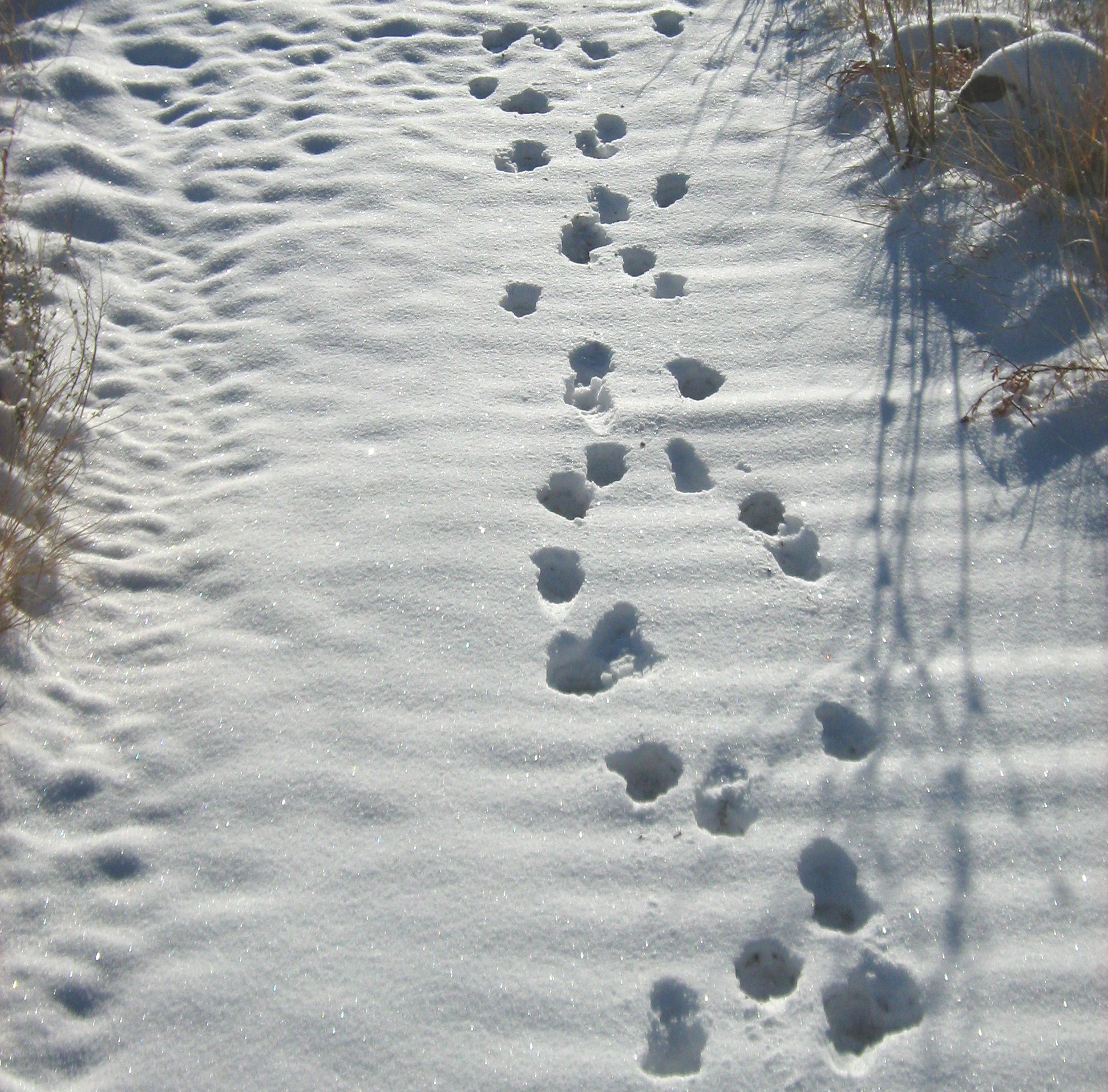
Figure 12. Wild animal footprints.
As a result of Boulder's trail popularity, it is very unlikely to spot wild animals while hiking. I almost gave up the hope, when I had an idea. One day I decided to go out early in the morning after an overnight light snow fall. In this way, I thought, I would at least be able to see wild animal footprints (Figure 12).
A Soldier and a Guitar
Old, black and white photographs are magical. They are tangible —otherwise lost— pieces of history. By looking at them, one can imagine to bring back to life fragments of the past. Those immortalizing people are particularly intriguing: long-gone faces staring at you. What were they doing immediately before and after the shot? How did their voices sound? Can they still silently deliver a message?
I have a box full of old family photos, dating back to the 1910s or thereabouts. They have a mesmerizing effect on me.
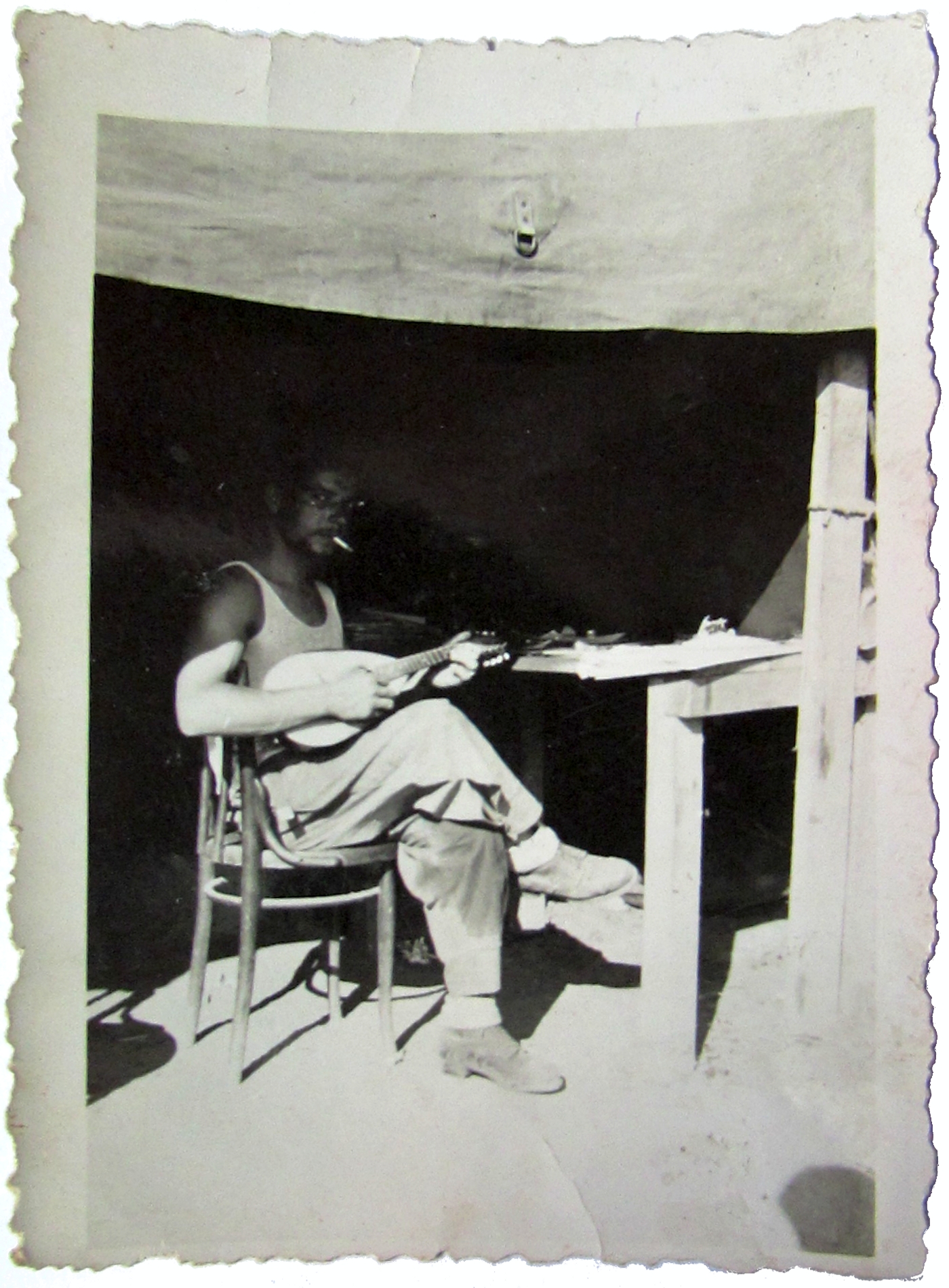
Figure 13. My grandfather in Albania, 1940.
My grandfather was an interesting person. Quite a character, one may say: he could pass from a hot-blooded temper to a completely calm behavior in a split second. Also, extremely well organized and blessed with a sharp intelligence. Long before I was born he enlisted in the Italian Army during World War II. Here is a picture of him (age 24) during a moment of respite near Giorguzzati, in the midst of the Italian invasion of Albania (Figure 13).
When I was a child we spent a lot of time together. He liked to tell stories about his youth, most of all about the war. War stories were indelibly etched in his memories. As he occasionally remarked, he would be waken in the middle of the night by memories of his comrades who died on the battle field. This continued to happen more then 40 years after the fact.
My grandfather was enlisted in the 31st Tank Regiment. His company was equipped with small and fast assault tanks, and located at the front line. He was one of the few soldiers in his regiment that knew how to read and write, so he was sort of a quartermaster for the company. Among the various organizational duties, he was in charge of collecting dog tags of those who had fallen in action. These were the events that most often recollected in his war tales. Young men uprooted from rural Italy to die on a strange land for no reason other than fascist foolishness. His tales were often punctuated with personal remarks, such as the fact that the generals in dress uniforms and warmongering politicians stayed behind, safe from the slaughter in the front line. I guess these facts contributed to my grandfather's repulsion for any form of authority.
But now, back to my grandfather's picture and the guitar. The picture lacks details due to the high contrast between sun light and the interior of the camp tent, yet the shadow cast by the chair reveals that it was taken mid-morning or mid-afternoon. Moreover, that it must have been a hot summer day, as suggested by the clothing. Interestingly, even though the picture was definitely taken in a moment of leisure, there is no joy on my grandfather's face. Sometimes I wonder how the war changed him, and why he never told me about the guitar. Maybe he was a fine guitar player, who decided to stop the music in respect to his fallen comrades. Maybe he was just mimicking playing to amuse his fiancee who would have received the picture, or perhaps for a few moments of distraction from the cruel reality. I will never know.
After spending more than 2 years in Albania, a grenade splinter hit him on the cheek. The wound became infected and shortly after he was repatriated. He spent the following months at a military hospital in southern Tuscany. During hospitalization it was decided that his company would be relocated to the African front. The boat carrying the soldiers and equipment was attacked and sunk on its way — there were no survivors. Without that grenade splinter, I would not be here today to tell the story about a 70-year-old faded picture of a young soldier and a guitar. Destiny surely follows unexpected paths.
Californian Big Trees
Most people experience a subtle attraction for certain things. For some it is the need to hike a mountaintop, or to eat their preferred food. For others it is a color, or perhaps an odor. As for me, I have long been fascinated by trees.
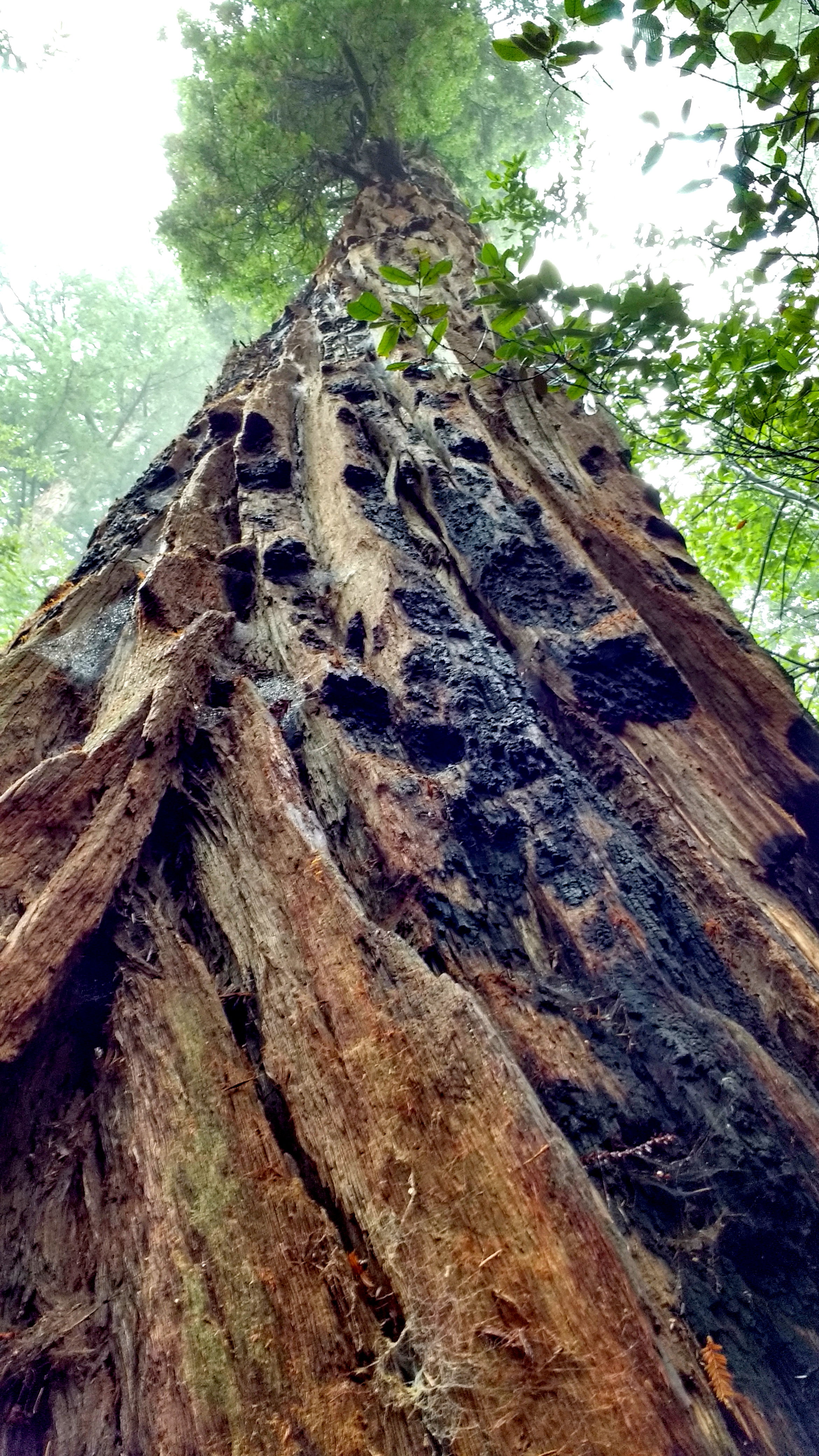
Figure 14. Redwood forest.
Most people experience a subtle attraction for certain things. As for me, I have long been fascinated by trees. A misty afternoon, while hiking in the redwoods in California (Figure 14), I pondered the reasons for my attraction: perhaps, it was the luxuriant foliage, or the aged trunks, or maybe the towering size.
Oftentimes I find myself day-dreaming of the ancient Earth and trying to picture how the land may have looked. Remarkably, plants spread over the Earth only about 430 millions of years ago (that is about 1/10th of Earth's history), and it took some more 60 millions of years for the first trees to appear. So, I imagine, during this time the land was covered in all directions by countless trees, of all shapes and colors, only bounded by climatic and ecologic conditions. Such was the Earth for hundreds of millions of years until mankind forever altered this natural equilibrium.
A good example of our influence on tree prosperity is given by the large expanses of old-growth forest that once populated the west coast of the United States. Massive firs, spruces, redwoods, cedars, giant sequoias tuned their genes to adapt and prosper in hundreds of miles coastal stretches as well as in the Sierras. Alas, only a few puny patches survive to this day. Coastal redwoods are the tallest trees on Earth, reaching up over 100 meters. In a hyper tech world that leaves little to awe, these trees are truly impressive. One cannot help but admiring their stature and shape. Many have ages in excess of 3,000 years. Western civilization was in its infancy at the time these trees were sprouting. But one's man wonder is someone else treasure, and after evolving to reach magnificent forms, it took a bunch of unwary, hungry men, some certainly were profiteers, to decide the fate of these pacific giants.
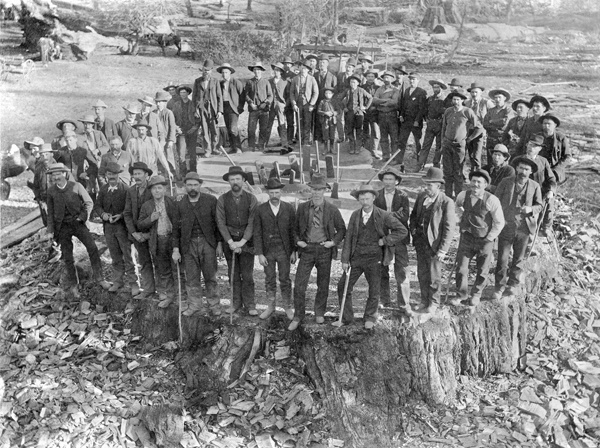
Figure 15. Mark Twain giant sequoia, 1891.
I hardly believe what I see in a book of old pictures. Glorious millinery trees indiscriminately cut down for lumber. Some of the biggest trees were even given names. A famous example is the Mark Twain giant sequoia (Figure 15). The tree was cut down during an eight-day job in 1891.
Coffee made in the USA
Let's talk about coffee. For us Italians, coffee is a serious business. It imbues our days. We religiously take coffee in the morning to leave behind the ghosts of the night before, and to clean-up the mind for the day ahead. We take quick mid-morning coffee to accompany a conversation with a friend or a colleague. We firmly take coffee immediately after lunch to formally end the meal, and help digestion. We take mid-afternoon coffee to hopefully keep the weariness at bay. Hardcore coffee-addicts take ossimoric coffee to relax and prepare to sleep. Oftentimes, coffee appears to us in dreams bestowing magical powers!
Italian bars offer a range of caffeinated beverages. Espresso: good at all times and occasions. Cappuccino: only allowed before 10:30 am. Lungo: for those who need more. Macchiato: mid-morning or mid-afternoon only; in large cups for the undecided. Latte macchiato: for the weak. Corretto: for seekers of an extra boost, typically after lunch or dinner.
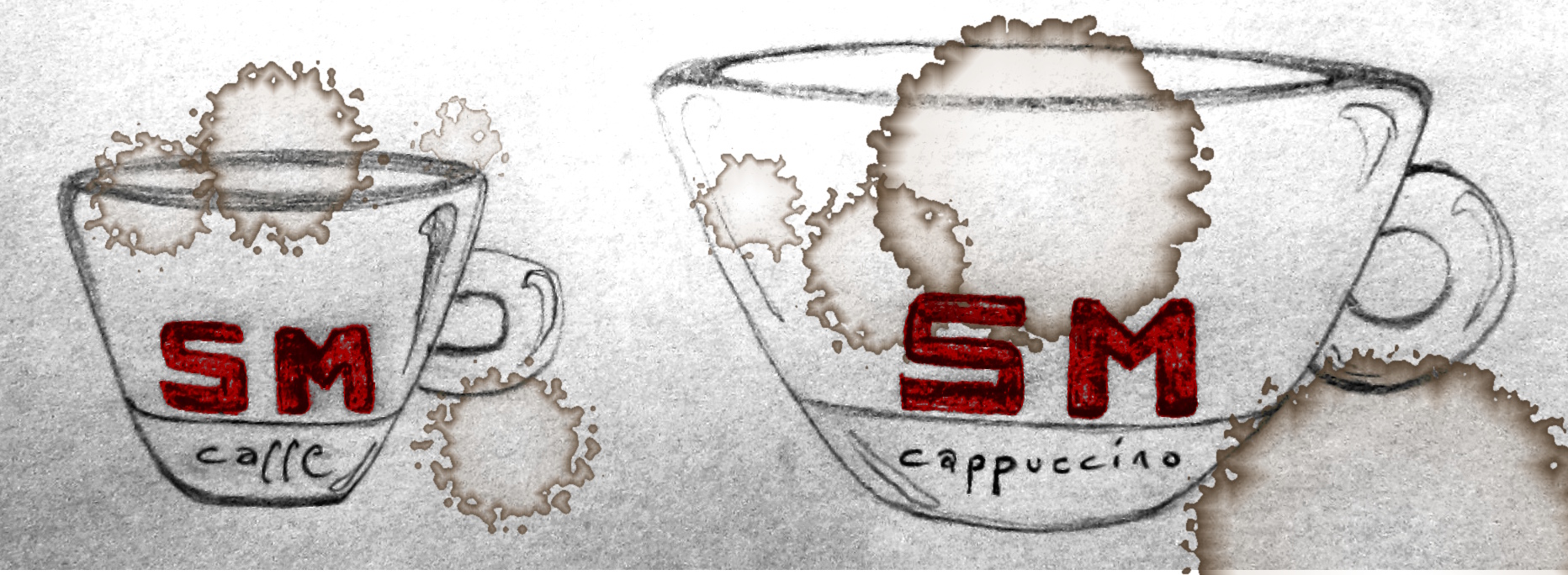
Figure 16. Espresso and cappuccino cups.
Coffee is a ritual. And the ritual dictates it has to be consumed quickly, often times standing at the bar counter. Coffee is not to distractedly sip while doing other activities, and the coffee cup (except for cappuccino) has to be small (Figure 16). So, don't you consider indulging by holding it in a tea mug to warm your hands in a cold day. Coffee is not for that.
Coffee is a clear-cut deal. You order one, and the barista swiftly delivers what you asked for. The entire ordeal takes less than a minute, no matter what type of coffee has been ordered, or how busy the bar is. Furthermore, coffee is cheap so everyone can afford a piece of the national ritual.
Ordering espresso in the US is more often than not a traumatic experience. Globalization, among other things, has allowed the widespread presence of Italian-style coffee shops. I enjoy being able to order espresso or cappuccino even in rustic southwestern villages. But in the US, baristas take the coffee making to a whole new level. They carefully grind the beans, then weigh the powder with a precision scale (I swear I have seen this more than once), steadfastly compress it, and meticulously remove the excess; then manipulate complex coffee-makers, decant coffee shots from a little glass to an espresso cup (if you're lucky, or to a depressing carry-out styrofoam cup). Finally, they indulge with the steam of a froth-maker.
I watch rapturous through all these phases and grow impatient as the clock ticks away. Seemingly endless amount of time to prepare an espresso. And I think, for heaven's sake, I just ordered a coffee, but then when I finally receive the desired cup, I feel relieved. Alas, the enthusiasm is short-lived, and my facial muscles contort after the well-deserved, first sip. With all this fumbling, how come the coffee is so awful? And at that precise moment, I realize I have just paid for the treacherous coffee 3-4 times more than what seems reasonable. But then, I tell myself, well these poor baristas work really hard with their precision scales and all, so their coffee deserves to be expensive, if anything else for their effort... naaaah... not really.
I actually would like to suggest to the American association of baristas (does such a thing exist?) to have their affiliates spend a month of training in an Italian bar of their choice. I can picture the scene. The first customer probably thinks the barista has mobility issues while slowly progressing through the detailed steps (including that precision scale). The second one thinks the barista is perhaps a bit dumb. The third one certainly asks what's the problem, and urges then to speed-up. The forth one summons the bar manager, who will promptly kick the barista out. All in less than 15 minutes, I bet. But every cloud has a silver lining, as they say, and the poor barista gets to enjoy the rest of the month sight-seeing. So, in the end, it is a win-win situation: the barista learns how to make a proper coffee and get some vacation time in Italy.
Oh, I am late for my mid-afternoon coffee. Wish me luck.
Portraits
Perhaps the only good thing about the pandemic is that it brought me back to artistic painting. Because of the long days spent at home, I decided to tackle a style and medium that I hadn't used much: Renaissance-like portraits in oils on canvas. I started making copies of famous astronomers, starting with my favorite, Galileo. Some examples are provided in Figure 17.
I was inspired by Leonardo da Vinci's 'sfumato.' I am by no means a great painter, but it has been very interesting to read about the great masters of the past and their techniques, and to try them out myself. One thing I quickly realized is that the great masters, starting with Leonardo, were simply out of this world—unreachable. I went through various levels of frustration, but slowly, I reached a result that I can live with. And that was comforting while the world outside was going crazy.
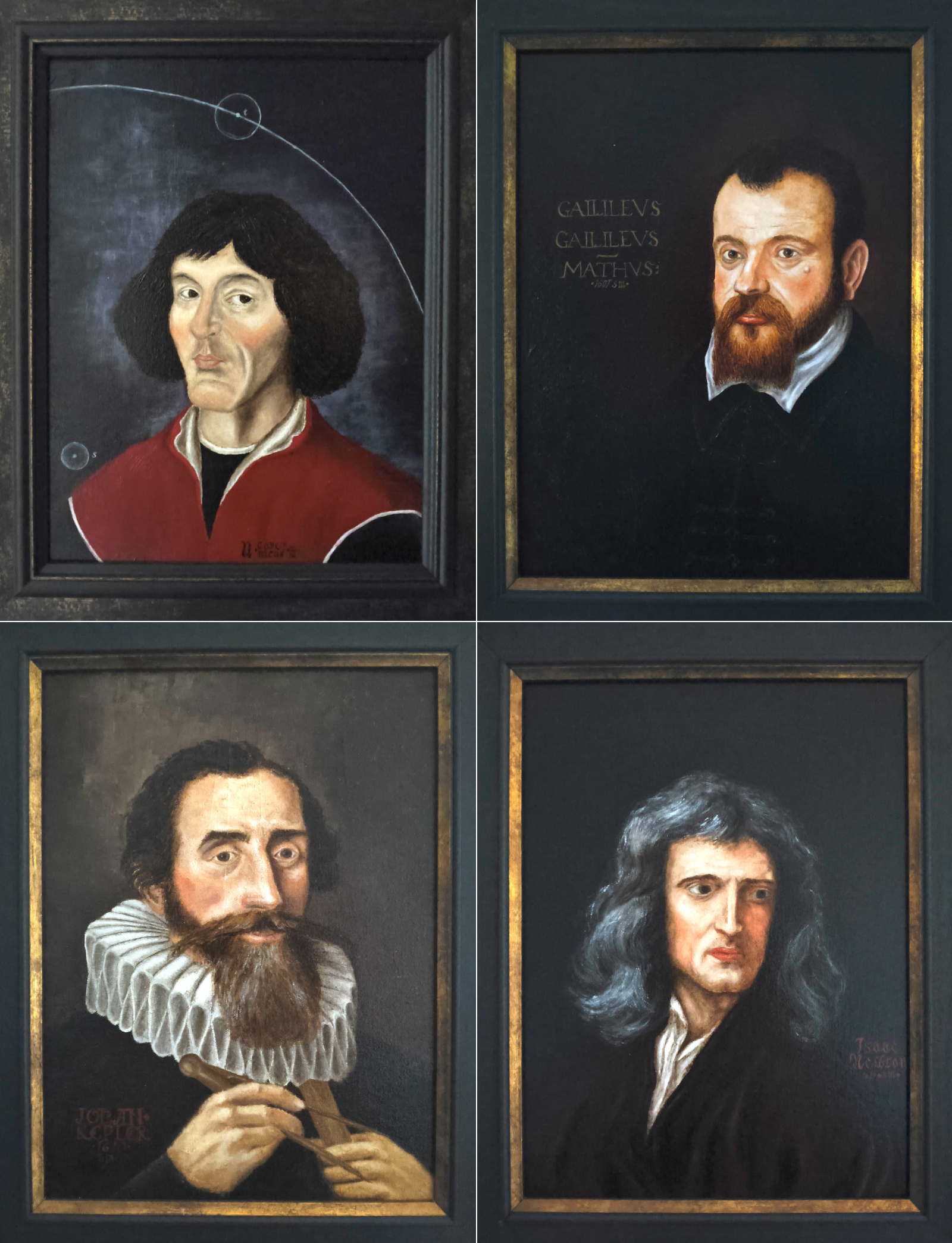
Figure 17. These are my own paintings of Nicolaus Copernicus (top left; original: Unknown, c. 1580), Galileo Galilei (top right; original: Tintoretto, c. 1604), Johannes Kepler (bottom left; original: Unknown, possibly a 19th century replica), Isaac Newton (bottom right; original: Godfrey Kneller, 1689).